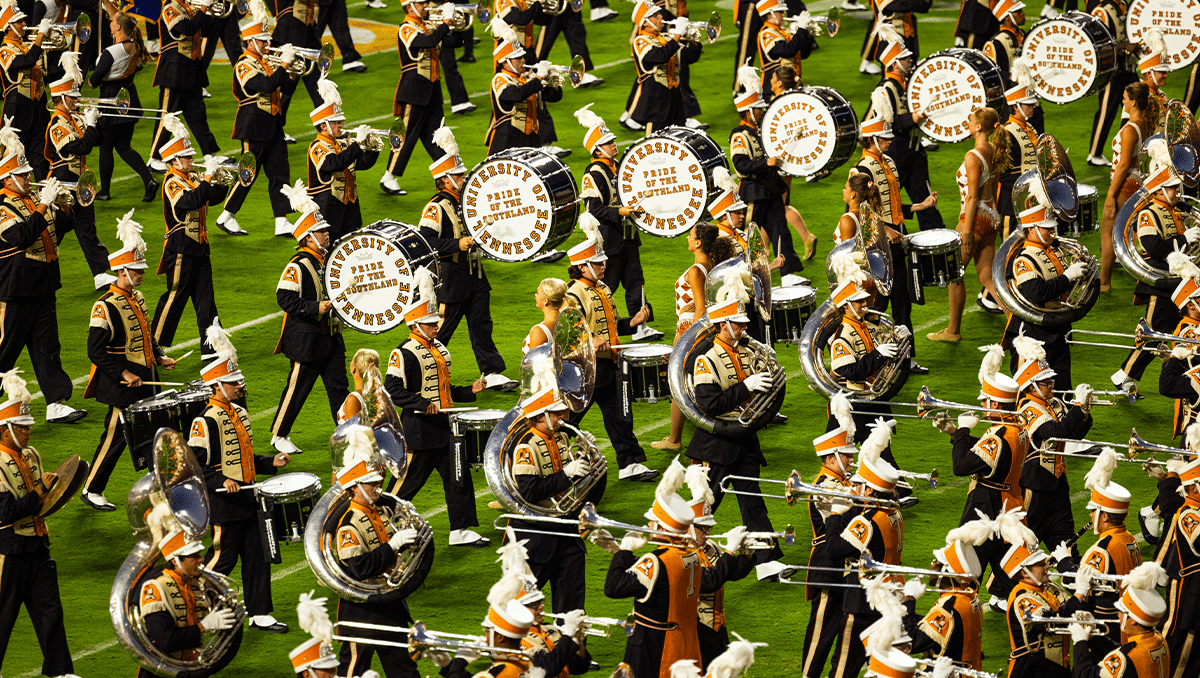
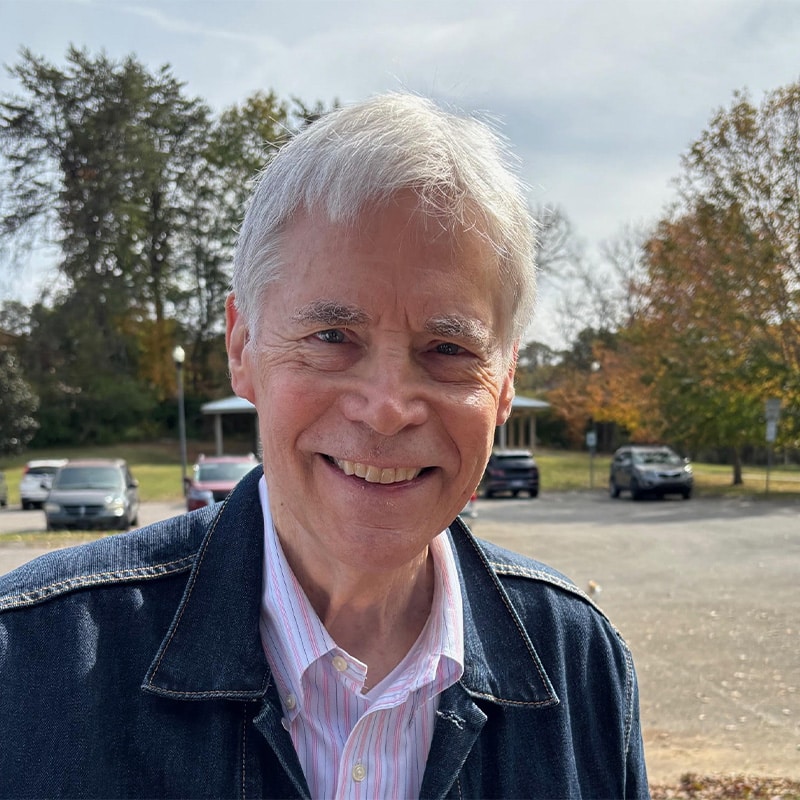
From singing Rocky Top to cheering on the players as they run through the T, Saturdays in Neyland Stadium are magical for those who take pride in wearing orange. And at the foundation of these Tennessee traditions you’ll find the University of Tennessee, Knoxville’s Pride of the Southland Band. As the band marches at halftime, performing its iconic circle drill, Ken Landgren (’ 69) and Pride of the Southland alumnus gets to watch his Volunteer legacy unfold on the field.
The creator of the Tennessee circle drill, Landgren spent his undergraduate years studying physics, so his time was often split between classes on the Hill and band practice playing trombone in the music building. At the time, Barry McDonald was the arranger for the band—work he’d also performed for Johnny Cash—and the illustrious WJ Julian served as the director.
Julian and McDonald would often watch the Drum Corps International competitions to get ideas to bring back to Rocky Top. During Landgren’s junior year of college, the pair witnessed the Madison Scouts make a circle on the field, with the circle contracting and expanding. The leaders were fascinated, but creating a similar drill would require mathematics and physics.
That’s where Landgren came in handy.
“I asked what they were thinking about doing next year, and Dr. Julian mentioned he’d like to do something with circles,” says Landgren. “I told him he should think about having several circles feed out from the center and ripple like a pond, and he said, ‘Show me!’”
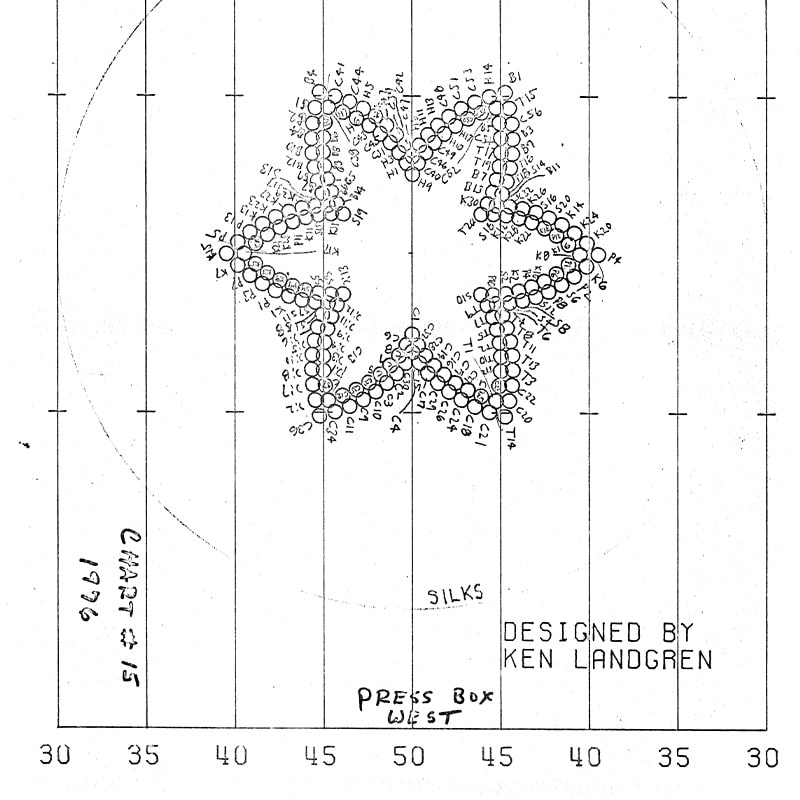
Thus, Landgren started writing down how the drill would work, using his physics skills to plan out how many people would stand where, how far apart they would be, and how many steps they would take to make the illusion work. The first of many complicated drills Landgren would write for the Pride of the Southland, the circle drill ended up on television and created an iconic tradition.
He continued to write drills for the Pride throughout the ’70s, forming them into spirals, flowers, and all kinds of intricate shapes and movements that made the Pride stand out from other college bands.
“For me, it was a fascinating puzzle to be able to work them out,” says Landgren. “Circle drills are highly mathematical, and of course, I was interested in the geometry of it all.”
The Pride of the Southland has grown exponentially since then. In his undergraduate years, Landgren marched with a band of 192 instrumentalists. Today, the band has over 400 students, and an elite 288 members get to march in the circle drill.
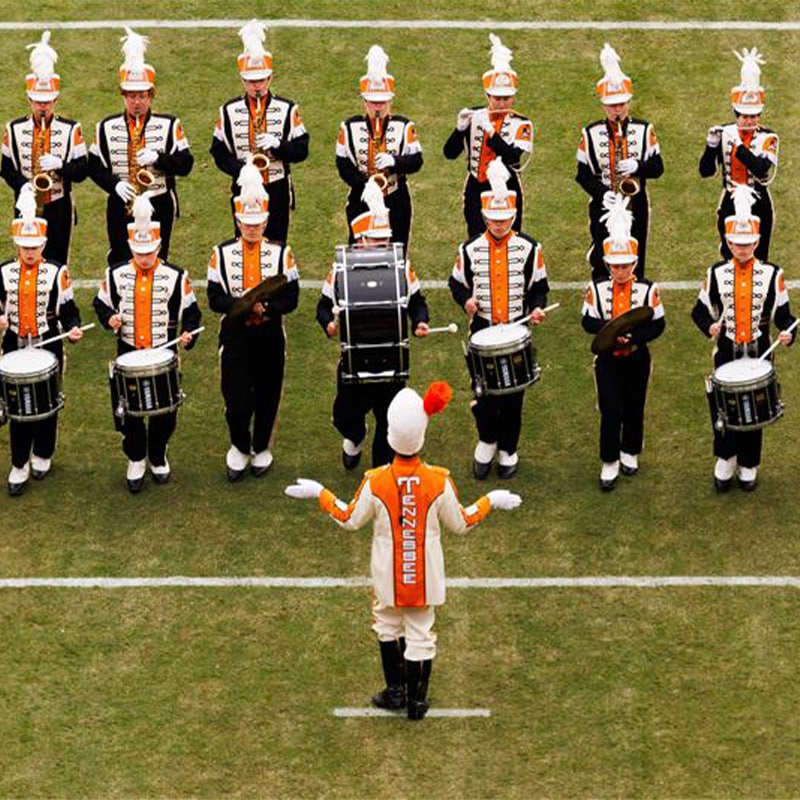
“Ken’s vision of circle drill has defined the Pride of the Southland Band for decades,” says John Zastoupil, director of bands. “Everywhere we go, fans and audiences request the circle drill show, our current members appreciate its importance to Tennessee, and our alumni come back year after year for Alumni Band to march circle drill. It’s as much a part of the Pride of the Southland Band as opening the T at pre-game.”
Getting to participate in the circle drill is considered an honor, which has humbled Landgren. His creation has been formative for the Pride of the Southland. He happily returned to Rocky Top a couple of years ago to continue writing drills. Hearing from someone who curated a piece of Vol history has been influential for students in the band.
“A lot of students in the band go on to become doctors, lawyers, engineers, and CEOs of companies,” says Landgren. “After four years of spending your Monday, Wednesday, and Friday afternoons out on a practice field, those memories mean a lot to people, even when they go on to other careers. To come back as alumni is so special.”
Landgren understands the importance of reliving fond memories of the undergraduate experience. Many Volunteers, including Landgren, return to march in the Pride of the Southland Alumni Band, which traditionally marches with the band at the Homecoming game each year. Many alumni band members have contributed to making those cherished experiences accessible to future students.
In fact, every student in the Pride of the Southland Band is able to receive a scholarship, something that wouldn’t be feasible without the leadership of the UT Band Alumni Council and the many generous alumni who give back so students can continue to make memories.
“In the end, you don’t remember the scores of the football game, or whether we won or lost,” says Landgren. “You remember the people you marched with in the rehearsals and at the game. Those are the memories people appreciate.”